
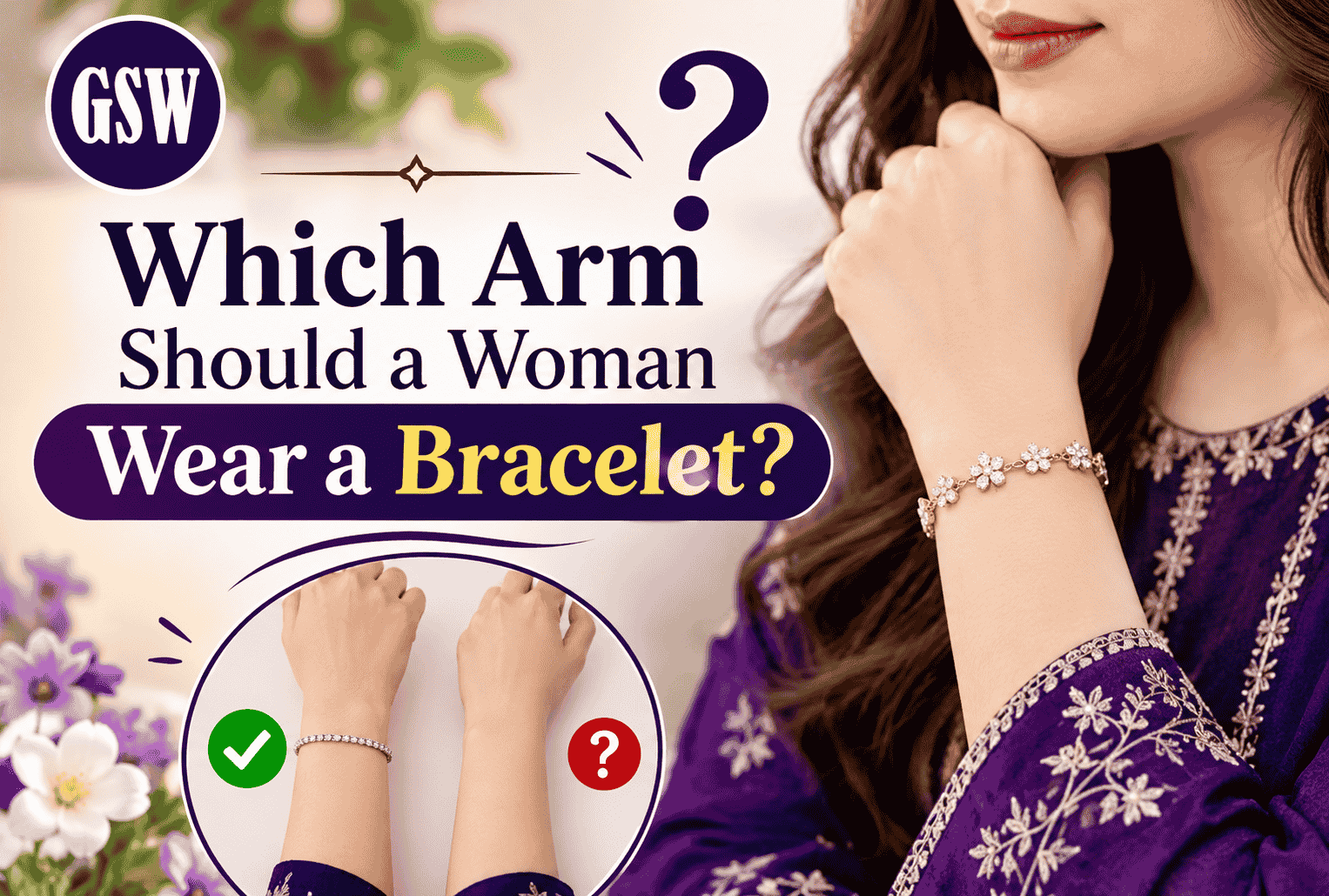
Choosing the right bracelet can add elegance, personality and a finishing touch to almost any outfit. But one common question often comes up when selecting jewellery: which arm should a woman wear a bracelet?
The simple answer is that a woman can wear a bracelet on either her left or right wrist. There is no universal fashion rule that requires bracelets to be worn on one particular side. The best choice depends on personal preference, dominant hand, comfort, watch placement and the type of bracelet.
Some women prefer their left wrist because it is usually their non-dominant hand, while others choose the right wrist to make their jewellery more noticeable. Both options can look equally stylish.
Whether you wear a delicate gold chain, a diamond tennis bracelet, a charm bracelet or a statement bangle, understanding a few styling principles can help you choose the most comfortable and attractive placement.
Let’s explore how to decide which wrist to wear a bracelet on, how to coordinate it with a watch and how to create a balanced jewellery look.
Which Arm Should a Woman Wear a Bracelet? Left or Right?
A woman can wear a bracelet on either wrist, depending on what feels natural and works best with her daily activities.
If you are right-handed, wearing a bracelet on your left wrist may be more practical because your left hand generally performs fewer daily tasks. If you are left-handed, the right wrist may offer the same advantage.
However, this is only a practical suggestion, not a fashion requirement.
Here is a simple comparison:
| Wrist | Why You Might Choose It |
|---|---|
| Left wrist | Convenient for many right-handed women and useful for delicate jewellery |
| Right wrist | A good option for left-handed women or anyone who prefers that placement |
| Both wrists | Suitable for balanced jewellery styling or statement looks |
The most important thing is that the bracelet feels comfortable and complements your personal style.
1. Wearing a Bracelet on the Left Wrist
The left wrist is a common choice for women who prefer keeping jewellery away from their dominant hand.
For right-handed women, this placement may reduce contact with desks, keyboards, tools and other objects during everyday activities.
It can also be useful when wearing delicate jewellery that might otherwise experience frequent friction.
When Is the Left Wrist a Good Choice?
Consider your left wrist when:
- You write or work mainly with your right hand.
- You want to keep a delicate bracelet away from frequent hand movements.
- You usually wear your watch on your right wrist.
- You prefer a subtle everyday jewellery arrangement.
A slim gold chain, pearl bracelet or delicate charm bracelet can look particularly elegant on the left wrist.
However, if you find the placement uncomfortable or distracting, there is no reason to follow it simply because it is common.
2. Wearing a Bracelet on the Right Wrist
The right wrist is equally appropriate for wearing a bracelet.
For left-handed women, it may be the more practical option because it is usually the non-dominant hand.
Right-wrist jewellery can also create an attractive visual balance when a watch or other accessories are worn on the opposite side.
When Is the Right Wrist a Good Choice?
The right wrist may suit you when:
- You are left-handed.
- Your watch is already on your left wrist.
- You want your bracelet to stand out more during everyday gestures.
- You prefer the appearance of jewellery on your right side.
A statement cuff, beaded bracelet or decorative bangle can work particularly well when you want your accessories to become a noticeable part of your outfit.
Remember that the right wrist is not reserved for a particular type of woman or occasion. It is simply another styling option.
3. How to Choose a Bracelet According to Your Dominant Hand
Your dominant hand plays a practical role in deciding where to wear jewellery.
The dominant hand usually performs more activities, including writing, typing, carrying objects and handling everyday tasks.
Because of this, some women prefer to wear delicate bracelets on the opposite wrist to reduce accidental bumps and friction.
Consider these general suggestions:
Right-handed women: The left wrist may be more convenient for delicate chains and gemstone bracelets.
Left-handed women: The right wrist may provide a similar benefit.
Women who use both hands frequently: Choose the wrist that interferes less with your everyday routine.
Women who prefer balanced styling: Wearing jewellery on both wrists can be an option when the designs are comfortable and coordinated.
Your dominant hand should guide your decision, but it should not determine it completely.
4. Can You Wear a Bracelet on the Same Wrist as Your Watch?
Yes. Wearing a bracelet and a watch on the same wrist is a popular way to create a coordinated jewellery look.
The key is choosing pieces that complement one another rather than compete for attention.
For example, a delicate gold chain bracelet can work well beside a simple watch. Similarly, a minimal silver bracelet can complement a classic metal watch.
Daniel Wellington’s bracelet and watch styling guide also discusses ways to combine wrist accessories.
Tips for Wearing a Bracelet With a Watch
- Choose a bracelet that is not much wider or heavier than the watch.
- Keep the overall combination visually balanced.
- Avoid pieces that repeatedly strike or rub against the watch.
- Leave enough room for comfortable wrist movement.
- Consider wearing the bracelet on the opposite wrist if the combination feels crowded.
Hard metal bangles and heavy bracelets can scratch or mark certain watch finishes through repeated contact.
If protecting an expensive watch is important, keeping a bracelet on the opposite wrist is a sensible option.
5. Different Bracelet Styles and Where to Wear Them
Not every bracelet has the same shape, weight or purpose. The type of jewellery can influence which wrist feels most comfortable.
Chain Bracelets
Chain bracelets are versatile accessories suitable for everyday wear.
They are available in different metal colours, thicknesses and decorative styles.
A delicate chain bracelet can be worn alone for a minimal appearance or combined with a simple watch.
For a refined everyday outfit, consider a slim gold or silver chain on whichever wrist feels more comfortable.
Bangle Bracelets
Bangles are typically rigid circular or oval bracelets.
They can create an elegant appearance when worn individually or as part of a small stack.
Because bangles move more freely than some chain bracelets, consider whether they repeatedly hit your watch, jewellery or desk while working.
Tennis Bracelets
Tennis bracelets feature a continuous line of diamonds or other gemstones arranged around the wrist.
They are popular for their elegant and timeless appearance and can complement both formal clothing and special-occasion outfits.
The Gemological Institute of America (GIA) explains in its tennis bracelet buying guide that there is no strict rule about which wrist to use. Comfort and personal preference should guide the decision.
Pay attention to the clasp and gemstone settings, especially if you plan to wear the bracelet regularly.
Charm Bracelets
Charm bracelets feature decorative elements that may represent personal memories, interests or meaningful occasions.
Some women enjoy wearing them on their dominant wrist because the charms become more noticeable during hand movements.
Others prefer the opposite wrist to reduce interference with daily activities.
Choose a comfortable placement where the charms do not constantly catch on clothing.
Pearl Bracelets
Pearl bracelets offer a classic and sophisticated appearance.
They can work well with formal outfits, dresses and elegant everyday clothing.
For delicate pearl designs, choose a placement where the bracelet is less likely to experience unnecessary friction or impact.
6. How to Match a Bracelet With Your Outfit
The right bracelet can make an outfit look more complete without requiring several additional accessories.
Instead of selecting jewellery randomly, consider the clothing colours, sleeve design and occasion.
Casual Outfits
For casual outfits, simple chain bracelets, small beads and minimal bangles can add a finishing touch.
They work well with jeans, relaxed tops, casual dresses and everyday footwear.
Choose jewellery that feels comfortable rather than overly decorative.
Office and Professional Clothing
For professional outfits, understated accessories are often a practical choice.
A thin bracelet, subtle bangle or delicate chain can complement shirts, blazers and formal dresses.
Avoid choosing pieces that make noise or interfere with typing and other work activities.
Party and Evening Outfits
Special occasions offer more freedom to experiment with statement jewellery.
Diamond-style tennis bracelets, decorative cuffs and layered bangles can complement evening dresses and elegant outfits.
Choose one main accessory to create a clear focal point rather than allowing several heavy pieces to compete.
Traditional and Formal Clothing
Traditional outfits can look beautiful with coordinated jewellery.
Depending on the outfit, you might choose gold bangles, gemstone bracelets, pearl designs or decorative cuffs.
Consider the colour and embroidery of your clothing when selecting jewellery.
7. How to Stack Bracelets Without Making Your Wrist Look Crowded
Bracelet stacking means wearing multiple bracelets together on the same wrist.
It can create a fashionable appearance, but balance is important.
Here are a few practical guidelines:
Start With Two or Three Pieces: Begin with a small combination rather than wearing too many bracelets at once.
Mix Textures Carefully: A delicate chain, simple bangle and beaded bracelet can create visual interest.
Coordinate Metal Colours: Gold, silver and rose gold can be combined, but the overall arrangement should look intentional.
Vary Bracelet Widths: Combining different thicknesses can make a bracelet stack more visually appealing.
Keep Comfort in Mind: Your wrist should move naturally. Bracelets should not feel tight or constantly collide with each other.
A well-planned bracelet stack should complement your clothing rather than distract from it.
8. How to Choose the Correct Bracelet Size
The right size is important for both comfort and appearance.
A bracelet that is too tight can restrict movement, while one that is too loose may slide excessively or become easier to catch on objects.
Tiffany & Co.’s official bracelet size guide explains how to measure wrist circumference and choose an appropriate fit.
Simple Bracelet Sizing Steps
- Wrap a flexible measuring tape around the area where you intend to wear the bracelet.
- Record your wrist measurement.
- Check the size chart provided by the jewellery brand.
- Consider the bracelet’s design and material.
- Try the bracelet, where possible, before making a final decision.
Different bracelet styles need different amounts of movement.
A chain bracelet may feel comfortable with a little extra room, while a fitted cuff or bangle may need a more precise size.
Avoid wearing jewellery so tightly that it causes discomfort or leaves persistent pressure marks.
9. Should Women Wear Bracelets on Both Arms?
Yes. Wearing bracelets on both wrists is completely acceptable.
Some women prefer a single bracelet on one arm, while others enjoy balancing their jewellery across both sides.
For example, you could wear a watch and a slim bracelet on your left wrist, then a simple bangle on your right.
Alternatively, two matching bracelets can create a coordinated appearance.
The important thing is avoiding unnecessary clutter.
If both wrists have heavy jewellery, the overall outfit may appear visually crowded. Try balancing a statement piece with simpler accessories.
10. Does the Occasion Matter When Choosing Which Wrist to Wear a Bracelet?
The occasion can influence your bracelet choice, although it does not determine a specific wrist.
For everyday activities, a comfortable and lightweight bracelet may be the most practical option.
For work, choose something that does not interfere with typing or other tasks.
For parties and formal events, you may prefer a statement bracelet that complements your outfit.
If your clothing has long sleeves, consider whether the bracelet catches on the fabric or becomes uncomfortable underneath it.
The best approach is to select jewellery according to the activity, outfit and level of comfort you want.
11. Practical Bracelet Care for Everyday Wear
Taking proper care of your bracelet can help preserve its appearance.
Different materials need different cleaning and storage methods, so always follow the manufacturer’s instructions.
A few useful habits include:
- Store delicate bracelets separately to prevent tangling.
- Keep jewellery away from unnecessary impacts.
- Remove bracelets during activities where they may catch or become damaged.
- Check clasps and gemstone settings regularly.
- Clean jewellery according to its specific material requirements.
For diamond tennis bracelets, GIA recommends paying attention to secure settings, clasps and regular inspection.
Final Answer: Which Arm Should a Woman Wear a Bracelet?
A woman can wear a bracelet on either her left or right arm. There is no universal fashion rule that makes one wrist more correct than the other.
For many right-handed women, the left wrist may be a practical choice. Left-handed women may prefer the right wrist for similar reasons.
If you already wear a watch, consider whether your bracelet looks better beside it or on the opposite wrist. The type of jewellery, your daily activities and personal comfort should guide the final decision.
Ultimately, the best bracelet placement is the one that feels natural and complements your individual style.
Explore more jewellery inspiration, outfit ideas and everyday accessories in the Womens Fashion collection at GupShup World.
Frequently Asked Questions About Womens Bracelet Styling
1. Which arm should a woman wear a bracelet on?
A woman can wear a bracelet on either her left or right wrist. There is no universal rule. The best choice depends on personal preference, dominant hand, watch placement and everyday comfort.
2. Should a right-handed woman wear a bracelet on her left wrist?
A right-handed woman may find the left wrist more convenient because it is usually her non-dominant hand. This can reduce interference with writing and everyday tasks, especially when wearing delicate jewellery. However, either wrist is acceptable.
3. Can a woman wear a bracelet and watch on the same wrist?
Yes. A woman can wear a bracelet beside her watch when both pieces fit comfortably and do not repeatedly rub against each other. Slim bracelets generally create a more balanced combination, while heavier pieces may work better on the opposite wrist.
4. Is it fashionable to wear bracelets on both wrists?
Yes. Wearing bracelets on both wrists can create a balanced and expressive jewellery look. The key is choosing pieces that complement each other and do not restrict normal wrist movement.
5. How tight should a womens bracelet be?
A womens bracelet should feel secure without squeezing the wrist. Chain bracelets generally need some room to move, while bangles and cuffs have different fitting requirements. Follow the jewellery manufacturer’s sizing guide and avoid a fit that causes discomfort or persistent pressure marks.