Fashion trends influence the way women discover clothing, build wardrobes and express their personal identities. From seasonal colours and popular silhouettes to social media outfits and celebrity-inspired looks, trends introduce new ideas that can shape everyday fashion choices.
However, following fashion does not mean wearing everything that becomes popular. A woman may admire a particular trend without wanting to buy it. Her final clothing choices often depend on comfort, lifestyle, budget, personal taste and the occasions for which she dresses.
Today, fashion inspiration is easier to find than ever. Instagram, TikTok, Pinterest, fashion magazines, online retailers and celebrity appearances all introduce new styles to a global audience.
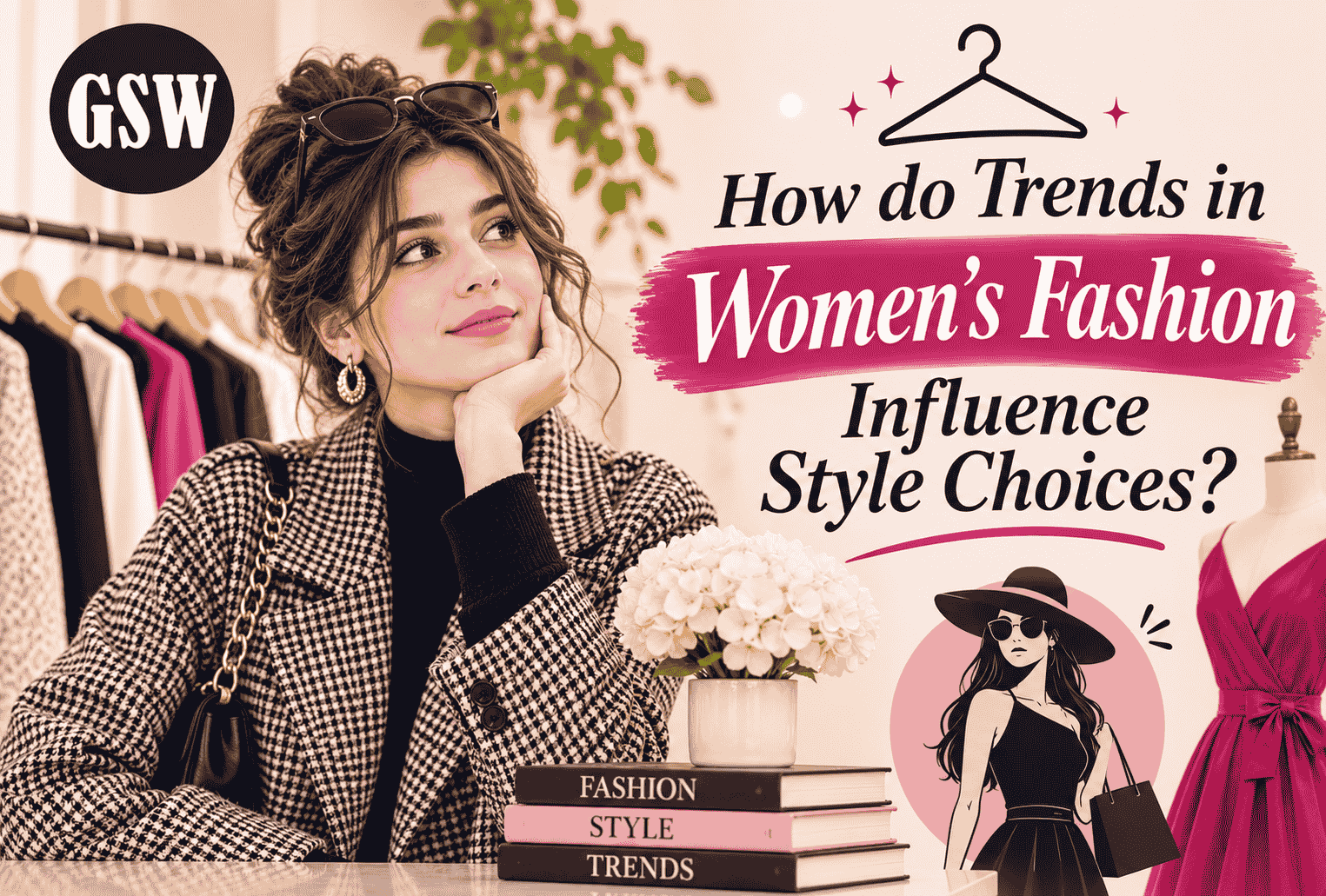
Understanding how do trends in womens fashion influence style choices requires looking beyond clothing itself. It involves understanding how people discover trends, decide whether they suit their lifestyle and turn inspiration into practical wardrobe decisions.
This guide explores the main influences behind women’s fashion choices and explains how to follow trends without losing your individual style.
How Do Trends in Womens Fashion Influence Style Choices? The Direct Answer
Trends in womens fashion influence style choices by introducing new colours, clothing designs, fabrics, accessories and outfit combinations. Social media, celebrities, designers, cultural influences and seasonal collections help women discover these trends.
Women then decide which trends to adopt based on personal preferences, comfort, budget, lifestyle and identity. This means fashion trends provide inspiration, but individual preferences ultimately shape the wardrobe.
1. Social Media Makes Fashion Trends More Accessible
Social media has changed how women discover and evaluate fashion.
In the past, fashion inspiration was often associated with magazines, television, fashion shows and retail stores. Today, platforms such as Instagram, TikTok and Pinterest allow users to explore thousands of outfits within minutes.
Fashion creators share styling videos, outfit combinations, shopping recommendations and seasonal inspiration.
For example, someone interested in minimalist fashion can discover neutral outfits, simple accessories and versatile wardrobe combinations through short videos and image collections.
Social media also makes it easier to compare different styling ideas before purchasing clothing.
A 2025 research study published in the Asia Pacific Journal of Marketing and Logistics examined fashion preferences among 20,387 respondents. It investigated how information literacy and social media engagement relate to consumers’ clothing preferences.
The research highlights the importance of digital engagement when understanding modern fashion preferences. However, its findings should not be interpreted as evidence that every woman follows social media trends.
Read the research: The Influence of Information Literacy and Social Media Engagement on Consumers’ Fashion Preferences.
How Women Can Use Social Media Fashion Inspiration
Rather than copying every outfit, women can:
- Save clothing combinations they genuinely like.
- Compare different ways to style similar garments.
- Explore outfit ideas suited to their lifestyle.
- Research brands before purchasing.
- Look for practical alternatives within their budget.
This approach turns social media into a useful source of inspiration instead of a reason for unnecessary shopping.
2. Celebrities and Fashion Influencers Shape Style Preferences
Celebrities and fashion influencers are important sources of fashion inspiration.
Their public appearances, clothing collaborations and everyday outfits can introduce particular colours, designers, accessories and clothing combinations to wider audiences.
For example, a celebrity wearing an oversized blazer with tailored trousers may encourage interest in similar smart-casual outfits.
Fashion influencers also make styling ideas easier to understand by showing how individual garments can be combined in everyday situations.
However, there is an important difference between inspiration and imitation.
A celebrity outfit may involve expensive designer clothing, professional styling and accessories that do not suit everyone’s budget.
Instead of purchasing the exact same outfit, women can identify the elements they like and recreate a similar appearance using clothing they already own.
3. Seasonal Fashion Trends Influence Wardrobe Choices
Seasonal changes influence the types of clothing people need.
Weather, temperature and daily activities determine whether lightweight fabrics, warm layers or practical outerwear are more suitable.
Spring and Summer Fashion
Warmer seasons often encourage women to choose breathable fabrics and lighter clothing.
Common wardrobe options include:
- Cotton dresses.
- Linen trousers.
- Lightweight shirts.
- Casual skirts.
- Comfortable sandals.
- Relaxed summer outfits.
Bright colours, floral prints and lighter accessories can also provide seasonal inspiration.
Autumn and Winter Fashion
Cooler weather creates opportunities to experiment with layering, textures and outerwear.
Popular options include knit sweaters, long coats, jackets, boots, scarves and warm trousers.
Women can also use neutral colours to create coordinated outfits without needing completely new seasonal wardrobes.
The most useful seasonal trend is one that provides comfort and suits the local climate.
4. Fashion Trends Influence Personal Identity and Self-Expression
Clothing can communicate personality, preferences, cultural background and individual identity.
Some women enjoy minimalist fashion because they prefer simple silhouettes and understated accessories.
Others enjoy bold prints, statement jewellery, bright colours or vintage-inspired outfits.
Fashion trends can introduce new possibilities for expressing these preferences.
For example, someone who usually wears neutral outfits may experiment with a bright handbag or patterned blouse after discovering an appealing combination.
A 2025 study published in Fashion, Style & Popular Culture explored the relationship between personal clothing style and self-concept through interviews with seven women.
The research discussed how personal style can express an individual’s sense of self, aspirations and creativity.
Although the study involved a small qualitative sample, it offers useful insight into why clothing choices can carry personal meaning beyond following trends.
Read the study: Personal Clothing Style and Self-Concept.
This helps explain why two women can see the same fashion trend and make completely different styling decisions.
5. Popular Colours Influence Women’s Fashion Choices
Colour is one of the most noticeable elements of fashion.
Designers, fashion retailers and seasonal collections often introduce colour combinations that attract attention and influence styling inspiration.
Neutral colours such as black, white, beige, grey and navy remain useful because they are easy to combine.
Brighter shades, earthy tones and contrasting colours offer opportunities to create more expressive outfits.
How to Introduce Trending Colours
You do not need to replace your entire wardrobe to experiment with colour.
Try adding a new shade through:
- A blouse or shirt.
- A handbag.
- A scarf.
- A pair of shoes.
- A skirt or pair of trousers.
One statement colour combined with neutral clothing can create a balanced look.
The best colour choice is one that complements your preferences and makes you feel comfortable.
6. Different Fashion Styles Give Women More Choices
Fashion trends introduce different aesthetics rather than one universal way of dressing.
Understanding these styles can help women recognise which clothing combinations suit their personalities.
Minimalist Fashion
Minimalist fashion focuses on clean silhouettes, simple colours and versatile wardrobe essentials.
Typical choices include plain shirts, tailored trousers, simple dresses and understated accessories.
This approach is useful for women who prefer clothing that works across different occasions.
Streetwear Fashion
Streetwear combines casual clothing with influences from music, youth culture and contemporary urban style.
It may include oversized shirts, sneakers, hoodies, relaxed trousers and statement accessories.
Classic Fashion
Classic fashion focuses on clothing that remains useful beyond short-term trends.
White shirts, tailored blazers, straight-leg trousers and simple dresses are common examples.
Vintage-Inspired Fashion
Vintage-inspired clothing takes ideas from previous fashion decades.
Women may experiment with flared trousers, retro prints, classic handbags and traditional silhouettes.
Bohemian Fashion
Bohemian fashion often features flowing garments, natural textures, relaxed silhouettes and expressive accessories.
It can be an attractive option for women who enjoy creative outfits and layered styling.
These fashion directions demonstrate that women can explore different trends without committing to one particular aesthetic.
7. Online Shopping Changes How Women Follow Fashion Trends
Online shopping has made fashion discovery and product comparison more convenient.
Women can explore clothing collections, check materials, compare prices and read customer reviews without visiting multiple physical stores.
Online retailers also use product recommendations and visual merchandising to introduce customers to related styles.
However, attractive product photography does not always show the exact fit, fabric quality or colour of a garment.
Before purchasing a trending item, consider:
- The actual fabric composition.
- Size charts and measurements.
- Customer photographs and reviews.
- Return and exchange conditions.
- Total price, including delivery.
- Whether the item suits your existing wardrobe.
A fashionable item is only a worthwhile purchase if it provides suitable value and works for your intended use.
8. Sustainable Fashion Encourages More Thoughtful Choices
Another important influence on modern clothing decisions is growing attention to sustainability.
Instead of constantly purchasing new outfits, some consumers are exploring ways to make existing clothing last longer.
Sustainable fashion encourages consideration of garment quality, production practices, material choices and the environmental impact of clothing consumption.
Practical ways to make more thoughtful fashion decisions include:
- Buying versatile garments.
- Choosing quality over unnecessary quantity.
- Rewearing existing outfits.
- Repairing damaged clothing.
- Exploring second-hand fashion.
- Checking brands’ sustainability claims rather than relying only on marketing language.
A 2025 review published in Women’s Studies International Forum explored fashion as a social and cultural influence in the digital age, including how social media and influencers shape fashion consumption.
Read the research: Philosophy of Clothing: Fashion as a Social Vector.
Sustainable fashion does not require giving up personal style. It encourages people to think more carefully about what they buy and how they use it.
9. Budget and Lifestyle Determine Which Trends Women Adopt
Not every fashion trend is suitable for every budget or lifestyle.
A designer outfit may attract attention, but it does not automatically offer better quality or value than a reasonably priced alternative.
Similarly, someone who works in a professional environment may prefer tailored outfits, while another woman may need comfortable everyday clothing for travel, family activities or outdoor work.
Before buying a trending garment, ask yourself:
- Will I wear it regularly?
- Does it work with clothes I already own?
- Is the price reasonable?
- Is the material comfortable?
- Does the design suit my everyday activities?
These questions can help prevent unnecessary purchases and encourage more practical wardrobe decisions.
10. How to Follow Fashion Trends Without Losing Personal Style
Following trends should be enjoyable rather than stressful.
You can stay aware of new styles while maintaining a wardrobe that reflects your own preferences.
Choose Trends That Match Your Personality
Focus on colours, shapes and clothing designs that genuinely appeal to you.
There is no need to adopt a trend simply because it is popular.
Start With Small Changes
Try a trending accessory, colour or clothing combination before purchasing several new garments.
Prioritise Comfort
Clothing should allow you to move comfortably and suit the activities you perform throughout the day.
Combine New and Existing Pieces
Experiment with current fashion ideas using garments already in your wardrobe.
This creates fresh outfit combinations without requiring unnecessary purchases.
Think About Long-Term Use
Consider whether you will still enjoy wearing an item after its popularity decreases.
Timeless clothing can provide more value than pieces selected only for a short-lived trend.
11. Why Personal Style Matters More Than Following Every Trend
Although fashion trends can introduce fresh ideas, they do not determine every woman’s clothing choices.
A 2026 study published in Fashion Practice examined the clothing choices of ten mothers aged from their mid-twenties to mid-sixties.
Its findings highlighted the importance of practicality, social identity and individual preferences alongside fashion influences.
The sample was small and exploratory, so it should not be treated as representative of all women. However, it reinforces an important point: the clothing people actually choose can be influenced by everyday needs as much as fashion trends.
This is why personal style is important.
A woman may appreciate an expensive fashion collection without wanting to purchase it. Another may prefer simple outfits that remain comfortable and suitable for years.
Neither approach is less fashionable.
The best wardrobe is one that supports an individual’s lifestyle, reflects their personality and provides useful outfit choices.
Final Thoughts: Making Fashion Trends Work for Your Personal Style
Fashion trends influence the way women discover clothing, experiment with outfits and make shopping decisions.
Social media, celebrities, seasonal collections, cultural influences and changing consumer preferences all contribute to the fashion conversation.
However, following every trend is neither necessary nor practical.
The most effective approach is to take inspiration from current styles while considering comfort, personal identity, quality and budget.
A strong personal wardrobe does not depend on constantly purchasing new clothes. It develops through thoughtful choices, versatile garments and an understanding of what works for you.
Ultimately, fashion should offer freedom of expression rather than pressure to follow every popular look.
Explore more outfit ideas and styling inspiration in the Womens Fashion collection at GupShup World.
Frequently Asked Questions About Womens Fashion Trends
1. How do trends in womens fashion influence style choices?
Trends in womens fashion influence style choices by introducing new colours, silhouettes, fabrics and clothing combinations. Social media, celebrities and designers provide inspiration, while personal preferences, comfort and budget determine which trends women adopt.
2. Why do womens fashion trends change?
Womens fashion trends change because of cultural influences, designer collections, consumer preferences, social media, seasonal requirements and developments in the fashion industry. New styles often reinterpret existing designs rather than completely replacing them.
3. Does social media influence womens fashion choices?
Yes. Social media exposes women to outfit inspiration, fashion creators, product recommendations and customer reviews. Research published in 2025 also examined the relationship between social media engagement, information literacy and consumers’ fashion preferences.
4. How can women follow fashion trends without spending too much?
Women can follow fashion trends by using existing wardrobe pieces, purchasing versatile clothing, choosing affordable accessories and avoiding unnecessary shopping. Comparing prices and planning purchases can also help manage clothing expenses.
5. Is personal style more important than following fashion trends?
Personal style is important because it reflects individual preferences, comfort, identity and lifestyle. Fashion trends can provide inspiration, but women do not need to follow every popular design to create attractive and practical outfits.