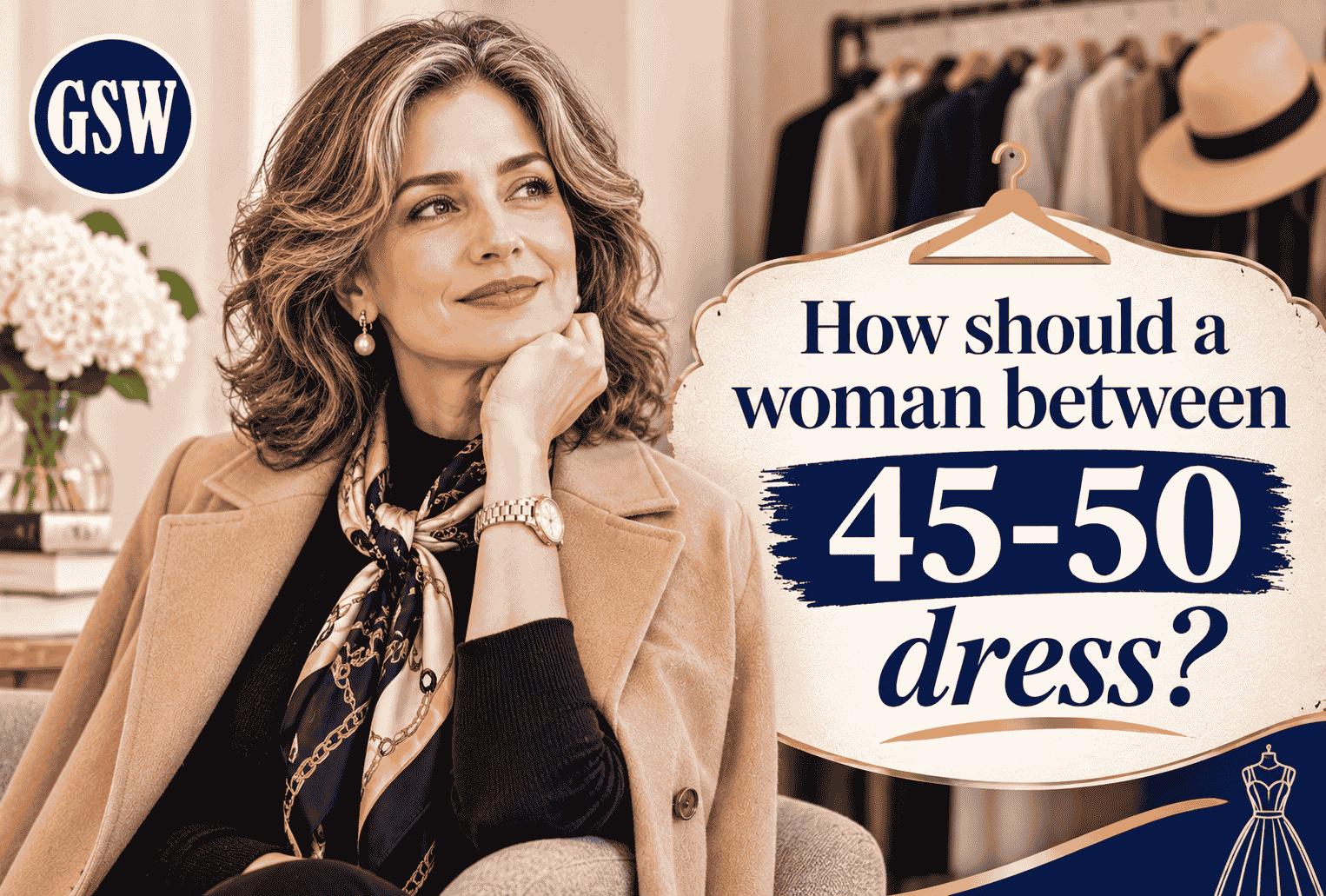
A woman between 45 and 50 can dress in almost any style she loves. The secret to looking polished is not following strict age-related fashion rules; it is choosing clothes that fit comfortably, complement her proportions, suit her lifestyle and express her personality. From tailored trousers and elegant dresses to modern denim, relaxed knitwear and stylish everyday outfits, the best wardrobe combines timeless essentials with carefully selected trends. (how should a woman between 45 and 50 dress)
Your late 40s can be an excellent time to refine your personal style. You may have a clearer idea of the colours, cuts and fabrics you enjoy, as well as the occasions you dress for most often. Instead of replacing your wardrobe because of your age, focus on making it more practical, versatile and genuinely enjoyable to wear.
1. Start With Fit, Not Your Age
The most important part of dressing well at 45–50 is finding clothes that fit your current body comfortably. A garment does not become flattering simply because it is expensive, fashionable or labelled for a particular age group.
Pay attention to the shoulders, waist, hips, sleeve length and trouser length. Clothes that pull, bunch up or restrict movement can make an outfit feel uncomfortable, while pieces with the right proportions create a more balanced appearance.
Consider these practical tips:
- Choose blazers that sit comfortably across your shoulders.
- Look for trousers that fit well at the waist and fall cleanly.
- Avoid tops that pull across the bust or restrict your arms.
- Have frequently worn garments altered when a small adjustment would improve the fit.
- Try different cuts rather than assuming one silhouette suits everyone.
A relaxed fit can look elegant, just as a more tailored outfit can. The goal is to find the balance that feels right for your body and personal taste.
2. Build a Wardrobe Around Timeless Essentials
A useful wardrobe does not need to contain dozens of expensive outfits. A carefully selected collection of versatile pieces can create many combinations for everyday activities, work, family occasions and social events.
Consider including these wardrobe essentials:
A Well-Fitted Blazer
A blazer can make a simple outfit look more structured. Wear it with straight-leg jeans, tailored trousers, a simple top or a dress. Navy, black, camel and neutral shades are versatile starting points, but choose colours that suit your existing wardrobe.
Quality Jeans
Denim is not restricted to younger women. Straight-leg, bootcut, wide-leg and relaxed styles can all work well, depending on your preferences and proportions.
Look for a comfortable waistband and a length that works with your chosen footwear. Dark-wash denim is useful for smarter casual outfits, while lighter washes create a relaxed appearance.
Classic Shirts and Blouses
A crisp shirt or a softly draped blouse can be worn in several ways. Pair one with tailored trousers for a smart outfit or wear it with denim for a more casual look.
White, pale blue, cream and subtle prints are useful options, but there is no reason to avoid brighter colours if you enjoy them.
Comfortable Knitwear
Fine-knit jumpers, cardigans and lightweight sweaters are practical layering pieces. Choose breathable materials and a neckline you find comfortable. A well-fitting knit can work with jeans, skirts and tailored trousers.
A Versatile Dress
A shirt dress, wrap-style dress, midi dress or simple tailored dress can be useful for different occasions. The right option depends on your preferred length, fabric, fit and lifestyle—not a rule about turning 45 or 50.
A Practical Coat or Jacket
A trench coat, structured jacket, wool coat or lightweight outer layer can help complete an outfit. Select one according to your local climate and how often you expect to wear it.
3. Choose Colours That Work With Your Personal Style
There is no universal colour palette for women aged 45–50. The most useful colours are those that complement your complexion, work with your existing wardrobe and make you feel comfortable.
Neutral colours such as navy, cream, charcoal, camel, beige and black can make outfit coordination easier. They also provide a useful base for more expressive colours.
You can introduce colour through:
- A bright blouse or knit top.
- A colourful scarf.
- A patterned skirt or dress.
- A handbag or pair of shoes.
- Statement jewellery.
If you are unsure about a new colour, try it near your face in natural light. Notice whether you enjoy the way it looks with your skin tone and other wardrobe pieces.
You do not need to wear only muted colours to look elegant. Red, emerald, cobalt, pink, purple and other vibrant shades can all have a place in a sophisticated wardrobe.
4. Find Silhouettes That Make You Feel Comfortable
Women have different heights, body proportions and preferences. There is no single silhouette that every woman between 45 and 50 should wear.
Instead of trying to hide your body, think about the overall shape and balance of an outfit.
Straight-Leg and Wide-Leg Trousers
Straight-leg trousers offer a clean, versatile shape. Wide-leg trousers can create a relaxed and flowing look, particularly when paired with a more fitted or neatly tucked-in top.
Midi Skirts
A midi skirt can be styled for work, lunch or a social occasion. Try pairing it with a simple blouse, fitted knitwear or a lightweight jacket.
Wrap and Shirt Dresses
Wrap-style dresses can offer adjustable shaping, while shirt dresses provide a structured yet relaxed option. Check the fabric and fastening to make sure the dress feels comfortable throughout the day.
Layered Outfits
A cardigan, blazer or jacket can add structure and make an outfit more adaptable to changing temperatures. Keep proportions in mind: if one layer is oversized, you may prefer a simpler or more streamlined piece underneath.
5. Create Stylish Everyday Outfits
Everyday dressing should be practical without feeling repetitive. A few reliable outfit combinations can save time and help you make better use of your wardrobe.
For casual days: Wear straight-leg jeans with a quality T-shirt, a cardigan and comfortable trainers or flats.
For shopping or lunch: Combine wide-leg trousers with a tucked-in top, a lightweight jacket and a practical shoulder bag.
For a relaxed weekend: Try dark denim, a soft knit jumper and ankle boots or clean sneakers.
For a polished daytime look: Pair tailored trousers with a blouse, loafers and a structured handbag.
For warmer weather: Choose a breathable cotton or linen shirt with comfortable trousers, a midi skirt or a relaxed dress.
These are starting points rather than fixed rules. Change the colours, footwear and accessories to suit your own taste.
6. Dress Elegantly for Work and Professional Settings
Professional dressing at 45–50 does not have to mean wearing formal suits every day. The right level of formality depends on your workplace, profession and personal preferences.
A few reliable combinations include:
- A tailored blazer with straight-leg trousers.
- A blouse with a midi skirt.
- A simple dress with a structured jacket.
- A fine-knit top with well-cut trousers.
- A coordinated two-piece outfit with comfortable shoes.
Pay attention to fabric condition, fit and finishing details. Neatly pressed clothing, clean shoes and well-maintained accessories can make an outfit look considered without requiring designer labels.
If your workplace has a relaxed dress code, smart jeans may also be suitable. Consider the environment before choosing your outfit.
7. Choose Shoes That Combine Style and Practicality
Shoes influence both the appearance and comfort of an outfit. You do not have to give up heels, trainers or fashionable footwear because you are in your late 40s.
Useful options include:
- Loafers for smart casual outfits.
- Ballet flats for simple everyday styling.
- Ankle boots for trousers, jeans and dresses.
- Low or block heels for occasions.
- Clean, minimal trainers for relaxed outfits.
- Comfortable sandals for warmer weather.
Prioritise a suitable fit, stable construction and footwear that you can walk in comfortably. A beautiful pair of shoes is not a practical choice if it causes discomfort after a short time.
8. Use Accessories to Give Outfits Personality
Accessories can refresh simple clothes and help an outfit feel more individual. You do not need to wear several statement pieces at once.
Try a structured handbag, a classic watch, a delicate necklace, a pair of earrings or a scarf. A belt can also help define the waist of certain dresses, shirts and trousers when you like that effect.
For a balanced look, consider choosing one main accessory and keeping the others relatively simple. However, if bold jewellery or colourful accessories are part of your personal style, you can absolutely make them a feature.
The best accessories are those you enjoy wearing and can use with more than one outfit.
9. Dress for Different Occasions
A versatile wardrobe should work for real life, not just photographs. The same person may need comfortable clothes for everyday errands, professional outfits, evening looks and special-event clothing.
For Family Gatherings
A midi dress, elegant blouse with trousers or coordinated outfit can be a comfortable choice. Select fabrics that allow you to move easily and enjoy the occasion.
For Dinner or Evening Events
Try a well-cut dress, tailored trousers with a refined top or a simple outfit with more expressive accessories. Choose footwear suitable for the venue and how long you expect to be standing or walking.
For Weddings and Celebrations
Consider the dress code, venue, weather and cultural expectations. A sophisticated dress, elegant suit or coordinated traditional outfit can work beautifully. Avoid assuming that a particular length or colour is compulsory because of your age.
For Travel
Comfortable trousers, breathable tops, a versatile jacket and practical shoes are useful foundations. Choose pieces that can be mixed and matched, especially when packing light.
10. Choose Fabrics That Suit the Weather and Occasion
Fabric affects how clothing feels, drapes and performs throughout the day. It is worth checking the material label before buying a garment.
Cotton can be a practical option for everyday tops and shirts. Linen is useful in warm weather, although it naturally wrinkles. Wool and suitable wool blends can provide warmth in cooler conditions. Viscose and other drapey fabrics can work well for blouses and dresses, but their care requirements vary.
Before purchasing, consider:
- Whether the fabric feels comfortable against your skin.
- Whether it is suitable for the season.
- Whether it needs special washing or ironing.
- Whether it keeps its shape after regular wear.
- Whether it is appropriate for the occasion.
A garment’s price or fibre name alone does not guarantee quality. Check its construction, seams, lining, fastenings and care instructions.
11. Avoid Common Wardrobe Mistakes
There are no universal clothing rules that a woman must follow after turning 45. However, a few common wardrobe habits can make getting dressed more difficult.
Buying clothes that do not fit: Do not keep a garment simply because you like its label or the size printed on it. Comfort and fit matter more.
Following every trend: Trends can be enjoyable, but buying every new style can create a wardrobe full of pieces that do not work together. Choose trends that genuinely suit your taste.
Ignoring alterations: A small adjustment to a sleeve, hem or trouser length can make a noticeable difference.
Choosing appearance over comfort: Clothing should allow you to sit, walk and move naturally. An outfit that looks good but feels restrictive may not be worth wearing.
Keeping unworn clothes indefinitely: Review your wardrobe occasionally. Identify pieces you wear regularly, items that need alterations and clothes that no longer suit your lifestyle.
Assuming certain clothes are too young or too old: Denim, trainers, bright colours, shorter skirts and modern prints do not have automatic age limits. What matters is how you style them and whether you feel comfortable.
12. Build a Wardrobe That Reflects Your Lifestyle
The best wardrobe for a woman aged 45–50 is one that supports her actual routine. Someone who works in an office may need more tailored pieces, while someone who works from home may prefer relaxed separates. A woman who attends regular social events may value dresses and occasionwear.
Before buying anything new, ask yourself:
- Can I wear this with at least two or three things I already own?
- Does it fit comfortably?
- Is the fabric suitable for the climate and occasion?
- Does it reflect the style I genuinely enjoy?
- Will I realistically wear it more than once?
These questions can help reduce unnecessary purchases and make your wardrobe more useful.
13. A Simple Capsule Wardrobe for Women Aged 45–50
A capsule wardrobe is a collection of pieces that work together, making it easier to create outfits without buying too many clothes.
You could begin with:
| Clothing item | Why it is useful |
|---|---|
| One well-fitted blazer | Adds structure to casual and formal outfits |
| Two pairs of versatile trousers | Suitable for work and everyday wear |
| One pair of comfortable jeans | A reliable casual foundation |
| Two classic shirts or blouses | Easy to style with different bottoms |
| Two quality knitwear pieces | Useful for layering |
| One versatile dress | Works for several social occasions |
| One practical jacket or coat | Completes outfits and suits the weather |
| Comfortable flats or loafers | Useful for regular activities |
| Trainers or casual shoes | Suitable for relaxed outfits |
| One pair of occasion shoes | Useful for formal events |
| A versatile handbag | Complements different looks |
This is only a starting point. Adjust the list to your climate, budget, work requirements and personal style. You do not need to buy everything at once.
14. Confidence Is an Important Part of Personal Style
Clothing can influence how you feel, but confidence does not come from following a particular trend or wearing a specific brand. It comes from understanding what works for you and choosing outfits that feel authentic.
If you love colourful dresses, wear them. If you prefer simple neutrals, build your wardrobe around them. If you enjoy denim, trainers or modern silhouettes, there is no reason to abandon them because you are approaching 50.
Fashion should support your lifestyle and self-expression rather than make you feel restricted. A woman between 45 and 50 can look elegant, modern, relaxed, creative or bold. The best style is the one she feels comfortable owning.
Frequently Asked Questions
1. How should a woman between 45 and 50 dress?
She should choose clothing that fits comfortably, suits her lifestyle and reflects her personal taste. Well-fitted trousers, quality jeans, versatile dresses, blouses, knitwear and suitable footwear can form a practical wardrobe. There is no single dress code for this age group.
2. What clothes should a 45-year-old woman avoid?
There is no universal list of clothes a 45-year-old woman must avoid. Instead, consider whether a garment fits properly, feels comfortable and suits the occasion. Poor fit, uncomfortable fabrics and clothes that do not work with your lifestyle may be less useful, regardless of age.
3. Can a woman in her late 40s wear jeans and trainers?
Absolutely. Jeans and trainers can create stylish everyday outfits at any age. Pair them with a well-fitting top, a blazer, knitwear or a suitable jacket to create a look that matches your personal style.
4. What are the best wardrobe essentials for women aged 45–50?
Useful essentials include a well-fitted blazer, comfortable jeans, tailored trousers, classic shirts, knitwear, a versatile dress, a practical coat, comfortable shoes and a handbag. The best selection depends on your climate, lifestyle and preferences.
5. How can a woman aged 45–50 look elegant without spending too much?
Focus on versatile clothing, good fit and thoughtful outfit combinations. Maintain your shoes and bags, use accessories to refresh simple outfits, and buy fewer pieces that work well together. Tailoring an existing garment can sometimes be more useful than purchasing a new one.
Final Thoughts
Dressing between 45 and 50 is not about following a new set of restrictions. It is about choosing clothes that make everyday life easier while expressing your personality. Invest in pieces that fit well, experiment with colours and silhouettes, and combine timeless wardrobe essentials with trends you genuinely enjoy.
You do not need to dress younger, older or like anyone else. Dress in a way that feels like you.